
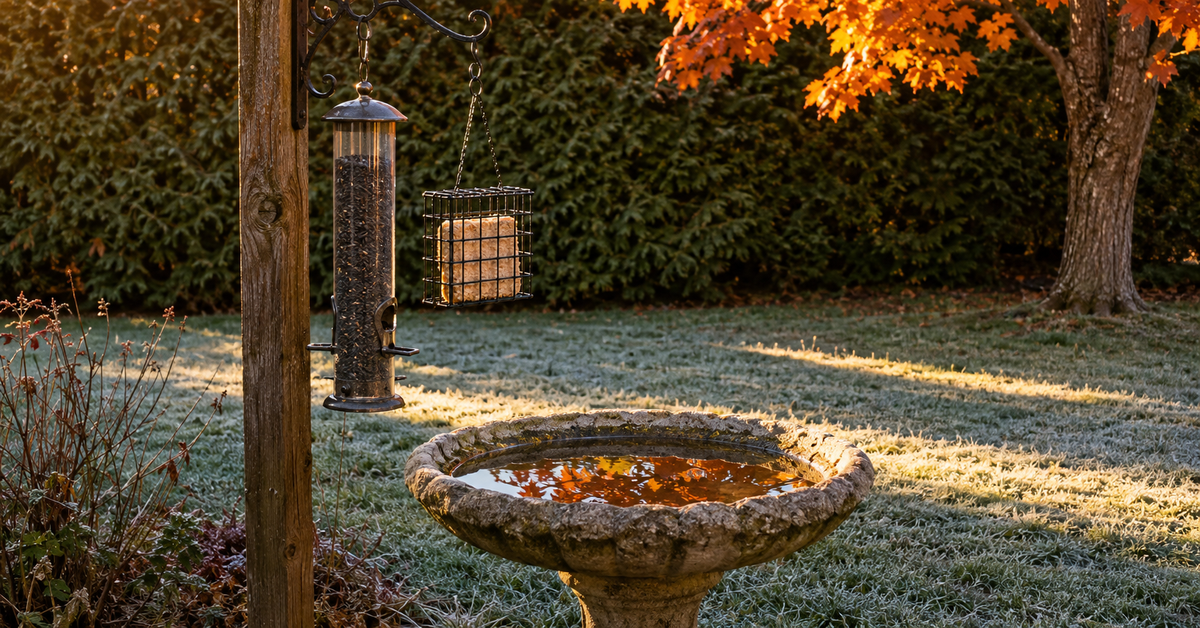
Every September, your backyard becomes a rest stop on one of the planet's great journeys. Here's how to run a good one.
The Yard Starts Moving
Sometime in early September, the backyard changes under you. The hummingbird that owned the nectar feeder all summer is suddenly gone. A sparrow you don't recognize is scratching under the spruce — white throat, tidy head stripes, a whistled song like the start of O Canada. The goldfinches are still here but the males are trading their yellow for olive, and one grey morning there's a junco on the ground where no junco was yesterday.
This is fall migration, and it runs through Canadian backyards from late August into November. Some of your summer regulars are leaving. Travellers from the boreal forest are passing through, hungry and briefly local. And the winter shift — juncos, tree sparrows, maybe siskins if it's that kind of year — is clocking in.
For a few weeks, your feeder isn't just feeding the neighbourhood. It's a rest stop on a highway that runs from the Arctic to the Gulf of Mexico. Here's how to stock it.
First, the Myth That Won't Die
Let's clear the one worry that keeps people from feeding in fall: your feeder will not stop birds from migrating. Migration isn't a decision birds make when the food runs low — it's triggered by day length, wired in over millions of years. When the photoperiod says go, they go, past the fullest feeder on the street without a backward glance.
What a feeder actually does in September is the opposite of trapping birds: it helps them leave in better shape. A migrating songbird is trying to nearly double its fat load before long flights — biologists call the pre-migration eating frenzy hyperphagia, and it's exactly what it sounds like. Reliable, high-energy food during those weeks is fuel for the journey, not a reason to skip it.
So feed generously in fall, with a clear conscience. The birds have a schedule, and you're the gas station, not the detour.
What to Put Out for Travellers
Fall feeding has one theme: fat and energy.
- Black oil sunflower is the backbone, as ever — thin shells, high oil, taken by nearly everyone from chickadees to the migrating White-throated Sparrows scratching below.
- Suet comes back on the menu as nights cool. By late September it holds its shape again, and it's premium fuel for woodpeckers, nuthatches, and chickadees stocking up for the cold — the highest calorie-per-visit food you can offer.
- Peanuts for the jays, who spend fall in a caching frenzy — every peanut that leaves your feeder in September is being banked in a lawn or hedge for January.
- Nyjer keeps the goldfinches through their quiet olive months and stands ready if siskins or redpolls come south — the finch clock runs on irruption years, and a stocked nyjer feeder is how you find out early.
- Scatter a little on the ground — or use a platform — for the migrant sparrows and arriving juncos, who prefer to feed low. This is where White-throated and White-crowned Sparrows will actually find your offering; most never touch a hanging feeder.
One honest note about who you won't feed: the warblers streaming south overhead are insect and fruit eaters, and no seed blend will bring them down. What serves them is habitat — water, cover, and the berries and standing seedheads we've written about before. If your dogwood is fruiting and your coneflowers are still standing, you're feeding migration in ways the feeder can't.
The Hummingbird Question
Every September someone asks whether the nectar feeder should come down "so the hummingbirds know to leave." Same myth, same answer: they know. Day length tells them, and the adults are often gone by Labour Day regardless of what you're serving.
The kind move is the opposite: keep the nectar feeder up and fresh for about two weeks after you see your last hummingbird. The late birds coming through — often this year's young, making the trip for the first time — are the ones that most need a reliable fuel stop. Keep the mix at the standard one part sugar to four parts water, keep changing it every few days while the weather holds warm, and let the stragglers find it. Then wash it, dry it, and store it for May.
Water Pulls Its Weight in Fall
A birdbath in September is quietly one of the best migration aids in the yard. Travelling birds need to drink and bathe — feather maintenance matters when you're flying to Georgia — and a reliable water source pulls in the migrants that seed never will, warblers included. Keep it topped up and keep it clean, on the same schedule as the feeders. If you do one extra thing for migration this year, make it water.
Windows, Briefly and Seriously
Fall migration is also the peak season for window collisions — millions of unfamiliar, hurried birds moving through unfamiliar yards. The fix is placement: feeders should sit either within a metre of a window (too close to build fatal speed) or more than ten metres away (room to see and steer). The dangerous zone is the middle distance. If a window near your feeder has claimed birds before, this is the season it will again — move the feeder this week, not after.
If Your Feeder Goes Quiet in Early Fall
One more reassurance, because it prompts worried emails every year: a quiet feeder in late August or September is normal. The wild pantry is at its fullest — seedheads, berries, insects everywhere — and many residents are lying low while they moult into fresh feathers. Nobody's sick and nobody's gone for good. Keep the feeder clean and stocked; as the wild supply thins through October, your regulars drift back, bringing the winter crowd with them.
Run a Good Rest Stop
Fall feeding is a short, generous season with a clear job: fuel for the leavers, welcome for the arrivers, and a clean, reliable stop for everyone passing through. Fill the feeders, float the birdbath through the first frosts, leave the seedheads standing, and keep an eye out for the one-week guests — the white-throated sparrow under the spruce is only yours for a little while, and that's rather the point.
The travellers don't send thank-you notes. They send juncos.
Frequently Asked Questions
Will keeping my feeders up stop birds from migrating?
No. Migration is triggered by changing day length, not food supply — birds leave on schedule regardless of how full the feeder is. Fall feeding actually helps: migrating birds are working to nearly double their fat reserves before long flights, and reliable high-energy food supports that. Feed generously and without guilt.
When should I take down my hummingbird feeder in Canada?
About two weeks after you see your last hummingbird — for much of Canada that means keeping it up and fresh into late September or early October. Leaving it up doesn't delay anyone; it fuels the late travellers, often first-year birds making the trip alone. Keep the nectar at one part sugar to four parts water and change it every few days until the visits stop.
What's the best bird food for fall migration?
High-fat, high-energy foods: black oil sunflower as the base, suet once nights cool, peanuts for caching jays, nyjer for finches, and some seed at ground level or on a platform for migrating sparrows and arriving juncos, which feed low. Fresh water in a clean birdbath rounds it out — it serves migrants that seed can't reach.
Why is my feeder so quiet in early fall?
Natural food is at its yearly peak — seeds, berries, and insects are everywhere — and many resident birds are moulting and keeping a low profile. It's normal and temporary. Keep the feeder clean and stocked, and traffic returns as wild food thins through October.
Do feeders help birds that don't eat seed, like warblers?
Not directly — warblers and most other long-haul migrants eat insects and fruit, so they'll pass over any seed feeder. What helps them is the rest of the yard: a clean birdbath, dense cover to rest in, native berries, and standing seedheads. A backyard that offers water and habitat feeds far more of the migration than the feeder alone ever could.

