
In our late-summer native plants guide, we promised a full article on feeder hygiene and bird illness — Canadian-sourced, no panic. Here it is.
The Part of Bird Feeding Nobody Puts on the Bag
Feeding birds is one of the gentlest hobbies there is. You put out good food, the regulars arrive, and your kitchen window becomes the best channel on television. But there's a quiet responsibility that comes with the invitation: a feeder is a gathering place, and anywhere birds gather — a feeder, a birdbath, a berry bush full of waxwings — is somewhere illness can pass between them.
Here's the reassuring part up front: feeder disease is the exception, not the rule, and almost all of it is preventable with one simple habit. The birds at your feeder are far more likely to be fat, loud, and arguing over the good perch than sick. This article exists so that on the rare day something looks wrong, you know exactly what you're looking at and exactly what to do — calmly, and with the right Canadian numbers to call.
Think of it the way you'd think of washing dishes before guests come over. Not fear. Just hospitality.
The Habit That Prevents Almost Everything
Nearly every piece of feeder-health guidance in Canada comes down to one routine, and it takes about fifteen minutes:
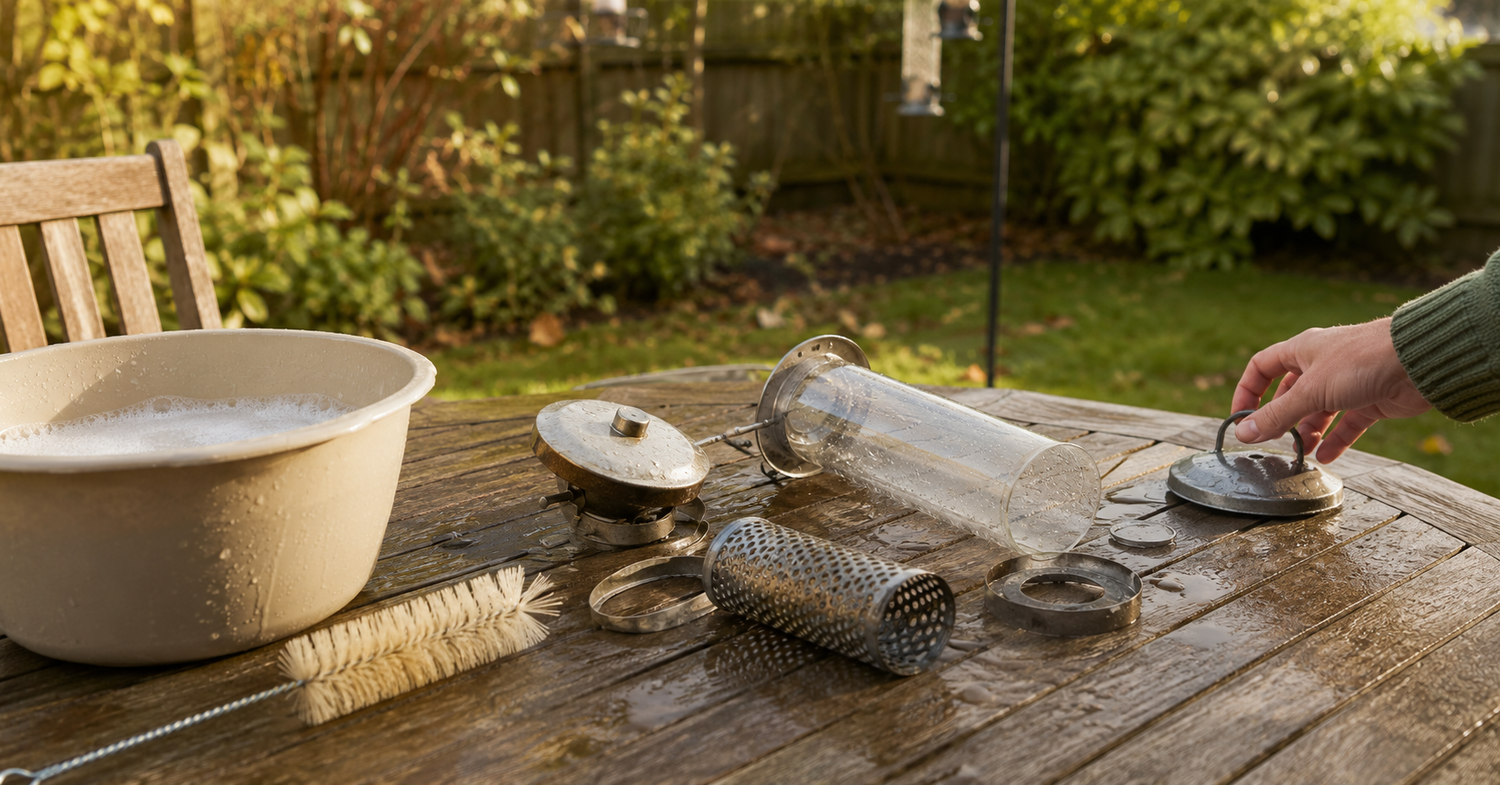
Every two weeks, give your feeders a proper clean. Birds Canada's protocol, which matches Cornell's Project FeederWatch guidance, goes like this:
- Take the feeder apart and knock out old seed and debris
- Scrub it in hot, soapy water
- Soak it for about ten minutes in a 10% bleach solution — one part household bleach to nine parts water
- Rinse thoroughly. Then rinse again — you want no trace of bleach left
- Let every part dry completely before refilling. Damp feeders grow mould; dry ones don't
While the parts dry, rake up the hulls and old seed underneath the feeder. That layer of ground debris is where droppings and damp seed mix, and it matters as much as the feeder itself.
Two situations move the schedule up to weekly: stretches of wet weather, and busy feeders in heavy use. And birdbaths follow the same protocol as feeders — same solution, same rinse, same full dry.
Hummingbird and oriole feeders run on a faster clock. Sugar water ferments, especially in heat. Change nectar every three to five days — every two or three in a hot spell — and clean the feeder weekly with hot water and a bottle brush, no soap. If you can't keep up with the nectar schedule in July, it's kinder to take the feeder down than to serve fermented sugar water. The flowers will hold the fort.
Three Illnesses Worth Recognizing
You don't need to become a wildlife vet. You need to recognize three patterns, because between them they cover nearly everything a Canadian feeder-watcher will ever see.
House finch eye disease (avian conjunctivitis)
What you'll see: a bird — most often a House Finch, sometimes a goldfinch, Purple Finch, or grosbeak — with red, swollen, crusty, or weepy eyes. In bad cases the eyes swell nearly shut, and the bird lingers on the ground under the feeder, fumbling for seeds it can barely see.
What it is: a bacterial infection (mycoplasmal conjunctivitis) that spreads where birds touch the same surfaces — which is exactly what a feeder port is. Feeders with openings birds insert their heads into can pass it along especially well.
What to do: take your feeders down for two weeks and run the full cleaning protocol before they go back up. Don't attempt to catch or treat the bird — its best chance is rest, and yours is a clean restart.
Avian pox
What you'll see: wart-like growths on the unfeathered parts of a bird — around the eyes, the base of the beak, the legs and feet.
What it is: a virus, spread by direct contact, contaminated surfaces, and biting insects. Growths can make it hard for a bird to see, feed, or perch.
What to do: same protocol — feeders down for two weeks, full clean, fresh start. Most birds with mild pox recover; what you're doing is protecting the rest of the flock while this one heals somewhere quieter.
Salmonellosis — the winter one
What you'll see: a bird sitting fluffed up and motionless, eyes half-closed, strangely tame — still perched when every other bird has flushed. It's most often a Pine Siskin, sometimes a redpoll or goldfinch, and it's overwhelmingly a winter story: outbreaks track the irruption years when siskins and redpolls pour south in flocks and crowd feeders through the cold months. British Columbia saw exactly this pattern in the siskin winter of 2021.
What it is: Salmonella bacteria, spread when droppings contaminate food — which is why crowded feeders and the debris layer beneath them matter so much.
What to do: feeders and birdbaths down, full protocol, and be stricter about the ground cleanup. Two extra notes, because this is the one common feeder illness that can pass to people and pets: wash your hands well after handling feeders, and keep cats and dogs away from sick birds and the area under the feeder. Sensible kitchen-level hygiene, not hazmat — but worth saying plainly.
The Two-Week Reset
You'll notice the advice repeats, and that's the point — there is one response to a sick bird at the feeder, and it works for all of the above:
- Take feeders and birdbaths down the day you see a sick bird.
- Run the full clean — scrub, 1:9 bleach soak, double rinse, complete dry.
- Rake and bin the ground layer beneath the feeding station.
- Wait two weeks before rehanging. The gap disperses the flock, breaks the transmission chain, and lets sick birds recover away from the crowd.
Two weeks feels long when the chickadees are giving you looks through the window. But the birds are fine — feeders supplement their diet; they don't replace it. A healthy chickadee spends most of its day foraging wild food anyway, and the flock will find you again within days of the feeder's return. The reset costs you a fortnight of viewing. It can spare the neighbourhood flock a great deal more.
A Calm Word About Avian Flu
Avian influenza makes headlines, so let's put it in backyard proportion. HPAI circulates primarily in waterfowl, shorebirds, raptors, and poultry. The songbirds at a seed feeder — chickadees, finches, nuthatches, cardinals — are at comparatively low risk, and Canadian wildlife-health guidance has not generally asked backyard birders to stop feeding songbirds because of it.
The practical rules: keep up the cleaning routine (it helps against everything, flu included); if you keep backyard chickens or ducks, keep wild-bird feeders well away from them — that's the interface that matters; and if your provincial wildlife agency issues a local advisory during an outbreak, follow it. Otherwise, feed on.
What a Healthy Feeding Station Looks Like
Beyond the cleaning schedule, a few design choices quietly do prevention work all year:
- Keep seed dry. Wet seed is where trouble starts — mould and bacteria both. Choose feeders that shelter seed from rain, and store your seed in a sealed container somewhere dry.
- Choose easy-clean materials. Plastic, glass, and metal feeders scrub and sanitize well. Porous wood holds onto whatever lands on it.
- Give the crowd room. If your feeder hosts a mob, a second feeder a few metres away thins the queue — fewer birds per perch means fewer chances for anything to pass along.
- Mind the ground floor. The debris layer under a feeder is the most neglected surface in most backyards. Shell-free seed helps here honestly — when everything gets eaten, there's no hull carpet accumulating below, which means less for droppings to mix into and less raking for you.
- Feed fresh. Seed that's sat open through a humid summer isn't a bargain. If it smells musty or clumps, it goes in the bin, not the feeder.
If You Find a Sick or Dead Bird
Don't handle birds with bare hands. If you need to move a dead bird, wear disposable gloves, place it in a sealed bag, and put it in household garbage — then wash your hands well.
And report it. In Canada, sick and dead wild birds go to the Canadian Wildlife Health Cooperative — call or use their online reporting tool at cwhc-rcsf.ca. It takes five minutes, and it's genuinely useful: those reports are how outbreaks get spotted early, mapped, and managed. Your backyard observation becomes part of the country's wildlife-health picture. That's citizen science with real teeth.
Feed On
None of this is a reason to stop feeding birds. It's the opposite: the people most likely to notice a sick bird early — and to do something useful about it — are the ones watching a feeder every morning with coffee in hand. A clean feeder, a watchful eye, and the willingness to take a two-week pause when something looks wrong: that's the whole job, and it makes you an asset to every bird on the block.
The birds have somewhere safe to eat. You have the best seat in the house. Keep it that way — the dishes just need doing every couple of weeks.
Frequently Asked Questions
Should I stop feeding birds because of disease risk?
No — routine feeding with routine cleaning is considered safe, and Canadian organizations like Birds Canada support it. Disease at feeders is uncommon, and the standard hygiene protocol (a two-week clean cycle, plus a two-week takedown if a sick bird appears) manages the risk. The time to pause is when you see sick birds, when a wildlife agency issues a local advisory, or when you can't keep up with cleaning.
How often should I clean my bird feeder?
Every two weeks as a baseline — scrub in hot soapy water, soak about ten minutes in one part bleach to nine parts water, rinse thoroughly, and dry completely before refilling. Go weekly during wet weather or heavy traffic. Hummingbird feeders are different: fresh nectar every three to five days and a weekly hot-water clean, no soap.
There's a sick bird at my feeder right now — what do I do first?
Take your feeders and birdbaths down today. Run the full clean, rake up the debris underneath, and keep everything down for two weeks before rehanging. Don't try to catch or treat the bird, and report it to the Canadian Wildlife Health Cooperative.
Can I or my pets catch anything from the feeder?
The one to respect is salmonellosis, which can pass to people and pets through contact with sick birds, droppings, or contaminated surfaces. The protection is ordinary hygiene: wash your hands after handling feeders, keep pets away from sick birds and the ground under the feeding station, and wear gloves if you ever need to move a dead bird.
Is avian flu a reason to take down feeders in Canada?
Generally no. Avian influenza circulates mainly in waterfowl and poultry; songbirds at seed feeders are considered lower-risk, and Canadian guidance hasn't broadly called for taking down songbird feeders. Keep your regular cleaning schedule, keep feeders far from any backyard poultry, and follow any local advisories from your provincial wildlife agency if an outbreak is declared in your area.

